
I'm in a complicated relationship with Christianity. The best label for me is probably "Christian atheist." I grew up in a Catholic environment, and Christianity is part of my cultural background — my landscape, metaphorically and literally, is full of the traces and testaments of the faith. But I don't believe in God. Rationally I'm agnostic: I can't prove there's no deity, no metaphysical force binding the universe together, yet I find that hypothesis deeply unrealistic.
I think of religion as a "byproduct" of a cognitive system that evolution shaped to keep us alive. Maybe we'd be better off outgrowing all of it — but I'm skeptical of the idea that, without religion, humankind would suddenly live in peace and harmony. Yes, in many parts of the world people of different faiths are killing each other; but I suspect that without religion humanity would just find other reasons to go to war. And at this particular moment in history, at least some faiths carry a powerful message of peace and respect.
None of this matters much for what follows. It's a foreword, no more, meant to explain where I stand toward Magnifica Humanitas, the encyclical letter on artificial intelligence by His Holiness Pope Leo XIV — a text that has been praised well beyond the ranks of the faithful. From my point of view there's nothing holy in this letter — but it's an influential work, and it's worth a close look. Let's begin.

The encyclical opens with a sentence that is both engaging and clear about the nature of the text:
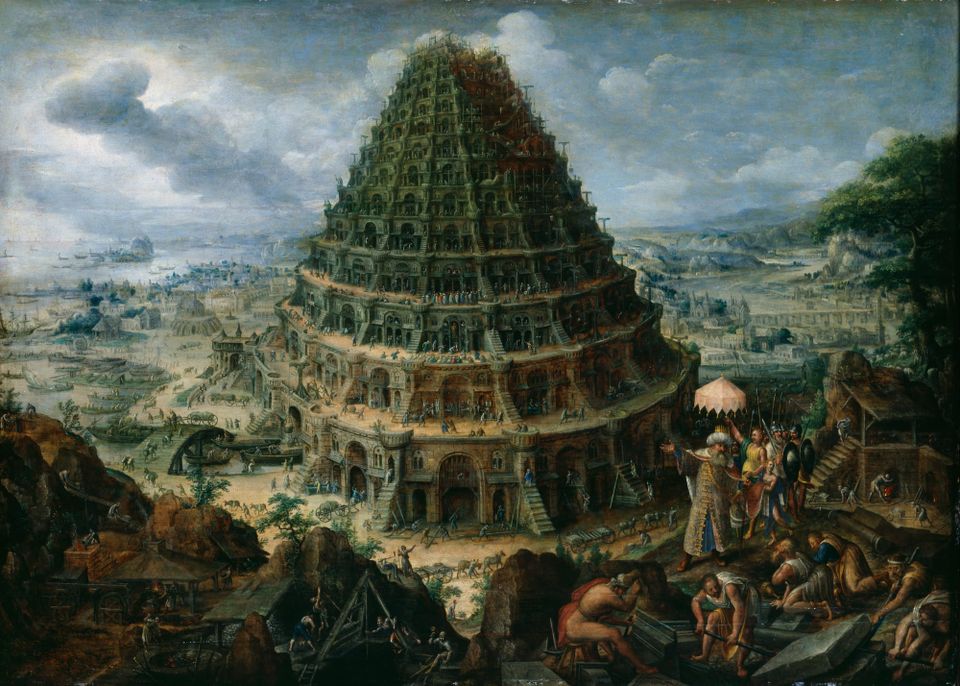
Humanity, created by God in all its grandeur, is today facing a pivotal choice: either to construct a new Tower of Babel or to build the city in which God and humanity dwell together.
"Created by God," "God and humanity together": this is an encyclical, a text for the Catholic community. In other words, it's not a manual to help society at large figure out how to live with artificial intelligence. It's a call for Catholics to contribute a Christian voice to the AI debate. The alternative it sets up — Babel or the City of God — is addressed to the faithful. It's also a false dichotomy, but I'll come back to that.
That's why I don't think this is the most important text on AI of the last few years, whatever some commentators have claimed. But it will almost certainly be the most widely read. The Pope has a following well beyond the Catholic world, and the encyclical is built for circulation — full of quotable lines ready to serve as an epigraph in an essay or to be dropped into a slide deck. Some are genuinely sharp — I may use a few myself — and some carry the faint aftertaste of a fortune cookie: humanity "must never be replaced or surpassed" (§126), progress should advance "without allowing the heart to regress" (§126), shared knowledge should become "a true common good rather than an instrument of dominance" (§178). But I want to be honest on this point: Magnifica Humanitas isn't badly written — for an encyclical, that is, an institutional text addressed to bishops and, through them, to the whole Church. Inevitably a bit tedious in places, occasionally over-rhetorical, but it would be terrific if all official documents read this well.